Why Americans Choose Undeveloped Land Retreats
Real Estate, Rural Living, Nature Retreats
Why More Americans Are Escaping to Undeveloped Land
Across the country, more Americans are quietly buying undeveloped land— not for immediate construction or quick flips, but as peaceful retreats where they can relax, find privacy, stargaze, and reconnect with nature on their own terms.
The New American Dream: Space, Stillness, and Sky
For decades, the classic vision of the American dream centered on a suburban house, a manicured lawn, and a short commute. In recent years, that picture has started to shift. More people are asking a different question: instead of more house, what if I simply had more space—and fewer demands on it?
Undeveloped land offers something that feels increasingly rare in modern life: the chance to step onto a piece of earth that is genuinely quiet, largely untouched, and not already scripted by someone else’s idea of how you should live. Buyers aren’t just purchasing acres; they’re buying possibility—a blank canvas that can be a weekend escape today and perhaps a cabin, homestead, or retirement haven years down the road.
📌 Key Takeaway: Undeveloped land resonates with people who value freedom, open space, and the option to keep things simple.
Why More Americans Are Buying Undeveloped Land
Several powerful trends are converging to make raw land especially appealing. Rising home prices have pushed many would‑be buyers to consider more affordable alternatives. At the same time, remote work has loosened the tie to city centers, allowing people to live—or at least escape—far beyond the suburbs. Add in a growing desire for self‑reliance and simpler living, and undeveloped acreage begins to look less like a luxury and more like a practical long‑term plan.
Affordability and flexibility: In many regions, a few acres of raw land cost less than a new car payment spread over a few years, giving buyers a foothold in real estate without a 30‑year mortgage or immediate construction costs.
Long‑term vision: Some buyers plan to slowly improve the land—adding a driveway, a well, or a small structure—over time, turning it into a future retirement or family gathering place while enjoying it as a rustic escape right now.
Hedge against uncertainty: In a world of digital everything, owning a tangible piece of earth feels grounding. It’s a physical asset, a backup plan, and a personal sanctuary all at once.
But beyond financial logic, the real draw is emotional. What pulls people toward these untouched places is the promise of a peaceful retreat—somewhere to exhale, unplug, and remember what it feels like to be unhurried.
A Peaceful Retreat for Deep Relaxation
Many new landowners describe a similar experience: the first time they step out of their car on their property, they notice what’s missing. No constant traffic hum. No sirens in the distance. No leaf blowers, delivery trucks, or neighbors’ televisions bleeding through the walls. Just wind in the trees, the low buzz of insects, and perhaps the distant call of a bird echoing across an open field.
This quiet isn’t empty—it’s restorative. For people worn thin by deadlines, notifications, and crowded calendars, undeveloped land becomes a personal wellness retreat. A simple day there might involve setting up a hammock between two pines, reading a book without checking the time, or dozing off to the sound of leaves rustling overhead. There’s no spa menu, no check‑out time, and no pressure to “make the most” of the day. Just space to be.
💡 Pro Tip: Many buyers keep their retreat rustic on purpose—think a fire ring, a folding table, and camp chairs—so the focus stays on rest, not on maintaining another full‑time property.
The Luxury of True Privacy
In dense neighborhoods and apartment buildings, privacy can feel like a rare commodity. Conversations carry through walls, balconies overlook one another, and even a backyard can feel like a shared stage. On a piece of undeveloped land, privacy takes on a different meaning. You can sit on the tailgate of your truck, sip coffee, and know that no one is peering in from a nearby window or walking a dog past your fence every few minutes.
This sense of seclusion is more than just physical distance. It’s the freedom to be yourself without an audience—whether that means practicing yoga at sunrise, journaling, playing guitar by the campfire, or simply sitting in silence. For families, private land can be a safe place for kids to roam, build forts, and get muddy without worrying about traffic or strict neighborhood rules. For couples, it can become a cherished hideaway, a place to reconnect away from the constant pull of work and screens.
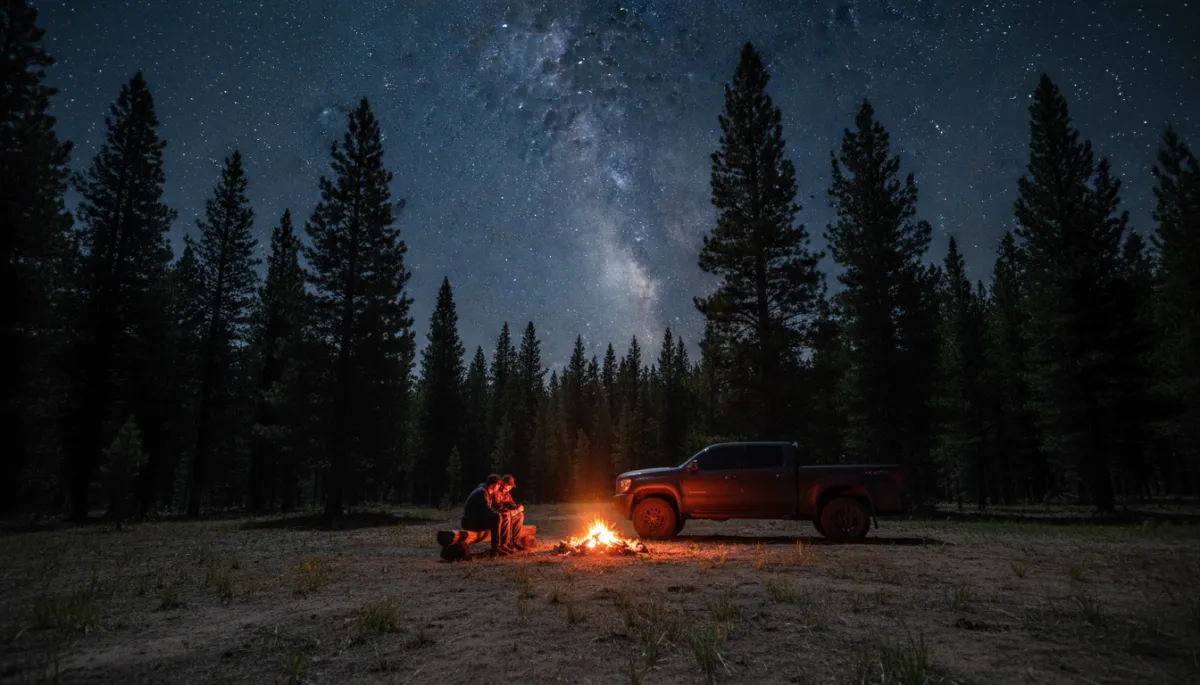
Private acreage turns an ordinary evening into a quiet, unforgettable escape.
Stargazing: Rediscovering a Dark, Quiet Sky
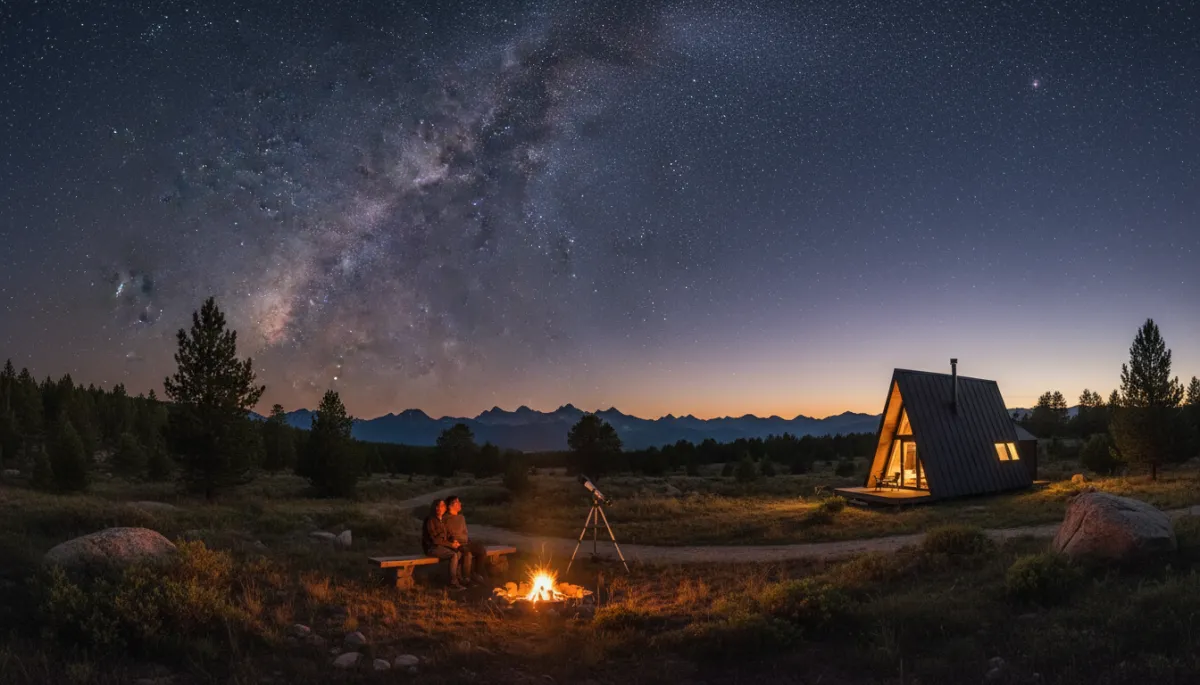
One of the most surprising joys of owning undeveloped land—especially in rural areas—is the night sky. In cities and suburbs, light pollution washes out most stars, leaving only a handful visible on even the clearest nights. Drive an hour or two into the countryside, however, and the sky transforms. The Milky Way becomes a pale, luminous band overhead. Constellations you’ve only seen in apps or textbooks suddenly stand out in crisp detail.
For many landowners, stargazing becomes a cherished ritual. They bring along a simple reclining camp chair, a blanket, and maybe a small telescope. Phones stay in airplane mode. Conversations grow softer as the sky darkens. There is something deeply humbling about realizing how much of the universe you’ve been missing behind streetlights and office windows. On your own land, you can stay as late as you like, watch meteor showers without jostling crowds, and share the experience with the people you love most.
📌 Key Takeaway: A dark, open sky is more than a pretty view—it’s a rare kind of quiet that invites reflection and perspective.
Reconnecting With Nature on Your Own Terms
National parks and public lands are wonderful, but they come with schedules, crowds, and rules. Owning undeveloped land offers a different kind of connection to nature—one that’s more intimate, slower, and woven into your regular life rather than reserved for rare vacations. You begin to notice the way the light changes across your field throughout the year, which birds return in spring, where the deer like to bed down, and how the air smells before a storm.
Some owners keep their land almost entirely wild, perhaps mowing a small path or clearing a single campsite. Others plant native grasses, put in a few fruit trees, or experiment with a small garden. The common thread is a desire to participate in the landscape rather than simply pass through it. Children learn where wildflowers grow and how to follow animal tracks. Adults rediscover simple pleasures: brewing coffee on a camp stove, splitting firewood, or listening to rain drum on a simple metal roof or tent fly.
This ongoing relationship with a specific place can be profoundly healing. Studies consistently show that time in nature lowers stress, improves mood, and supports better sleep. When that nature is your own quiet acreage, you don’t have to book a trip or drive for hours to feel those benefits. You can decide on a Friday afternoon that it’s been a long week, toss a bag in the car, and be under the trees by sunset.
A Gentle Shift in How We Define “Home”
Not everyone who buys undeveloped land plans to live on it full‑time. For many, it’s a second place that slowly becomes just as meaningful as their primary address. Over time, a simple fire ring might grow into a small off‑grid cabin. A rough trail might lead to a favorite overlook or creek crossing. Family traditions take root: a yearly fall camping weekend, a summer stargazing night, a quiet New Year’s morning watching the first sunrise of the year crest over the hills.
In this way, undeveloped land is changing how many Americans think about “home.” Instead of a single building, home becomes a network of places that support different parts of life: the city apartment close to work, the suburban house near schools, and the wild acreage that offers something neither of those can, quiet, privacy, stars, and unstructured time. The land doesn’t have to be perfect or polished to be deeply loved. In fact, its rough edges and rawness are often what make it feel most real.
The Quiet Appeal of Owning a Piece of Wild
As life grows louder, faster, and more digital, the appeal of a simple patch of undeveloped land makes intuitive sense. It’s a place where relaxation isn’t scheduled, privacy isn’t negotiated, stargazing doesn’t require a ticket, and reconnecting with nature doesn’t involve standing in line at a trailhead. It’s just you, the land, and whatever you choose to bring, or leave behind, each time you visit. For those interested in recreational land, off-grid properties, and rural investment opportunities, there are thousands of undeveloped land parcels available throughout the United States.
For a growing number of Americans, that’s worth far more than granite countertops or another spare bedroom. They’re quietly choosing a different kind of investment: one measured not only in potential future value, but in sunsets watched, constellations learned, and deep breaths taken far from the nearest streetlight. In a restless world, a little piece of wild earth is becoming one of the most powerful luxuries of all.